
Psychological safety has frequently been raised in the last few years as a significant component of successful sales teamwork. It is.
But as a senior leader, you will also realize that psychological safety has wider implications than wellbeing at work alone. It’s a critical lever in performance, decision-making, and outcomes.
In this article, we’ll look at psychological safety from this perspective, as well as examining the part that conflict resolution has in ensuring your teamwork remains effective even when you lose deals.
Psychological Safety is a Cultural Condition, Not a Soft Management Idea
Psychological safety sits inside culture – team culture and business culture – whether you actively shape it or not.
What creates it are the patterns of behavior that play out daily:
- how decisions are questioned
- how mistakes are discussed
- how disagreement is handled, and
- how leaders respond when performance is under pressure.
This matters because culture is not something that only large sales organizations need to think about.
In smaller teams, culture is often even more visible – and often more fragile. One poorly handled disagreement, one public undermining of a manager, or one quiet punishment for speaking up can reset the tone of an entire team very quickly.
For you, then, psychological safety is not about creating comfort or avoiding challenge.
You’re creating a working environment where people are able to raise risks early, challenge assumptions, admit uncertainty, and surface problems before they show up in missed forecasts or lost deals.
That environment doesn’t happen by accident. It’s something you can reinforce – or erode – over time.
And crucially, your teams will take their cues less from stated values and more from what actually happens when something goes wrong.
When leaders consistently respond fearlessly to issues with curiosity rather than blame, and with clarity rather than emotion, they signal that the team can focus on solving problems rather than protecting themselves.
That’s where psychological safety becomes a commercial asset you need to promote rather than a cultural aspiration (essential as that is).
Why Friction is Inevitable in Sales Teamwork – And Why That’s Not a Problem
Sales teams operate under constant pressure. In that environment, friction is a natural outcome. After all, disagreement often reflects legitimate differences in perspective.
Managers may prioritise forecast accuracy versus short-term revenue, or debate how much flexibility reps should have in pricing and negotiation. These tensions are part of navigating real trade-offs.
Problems arise when you equate “good culture” with harmony. Teams that appear calm on the surface may simply be avoiding open disagreement. That’s the route to a toxic culture.
Psychological safety doesn’t mean removing conflict from sales teams. It changes how conflict shows up and how quickly you address it. Your team will raise disagreement earlier, handle it more directly, and stay focused on the work.
So – your goal is not to eliminate friction, but to prevent it becoming personal or corrosive. Managed well, conflict actually sharpens decisions and reinforces accountability.
How Poor Conflict Handling Undermines Psychological Safety
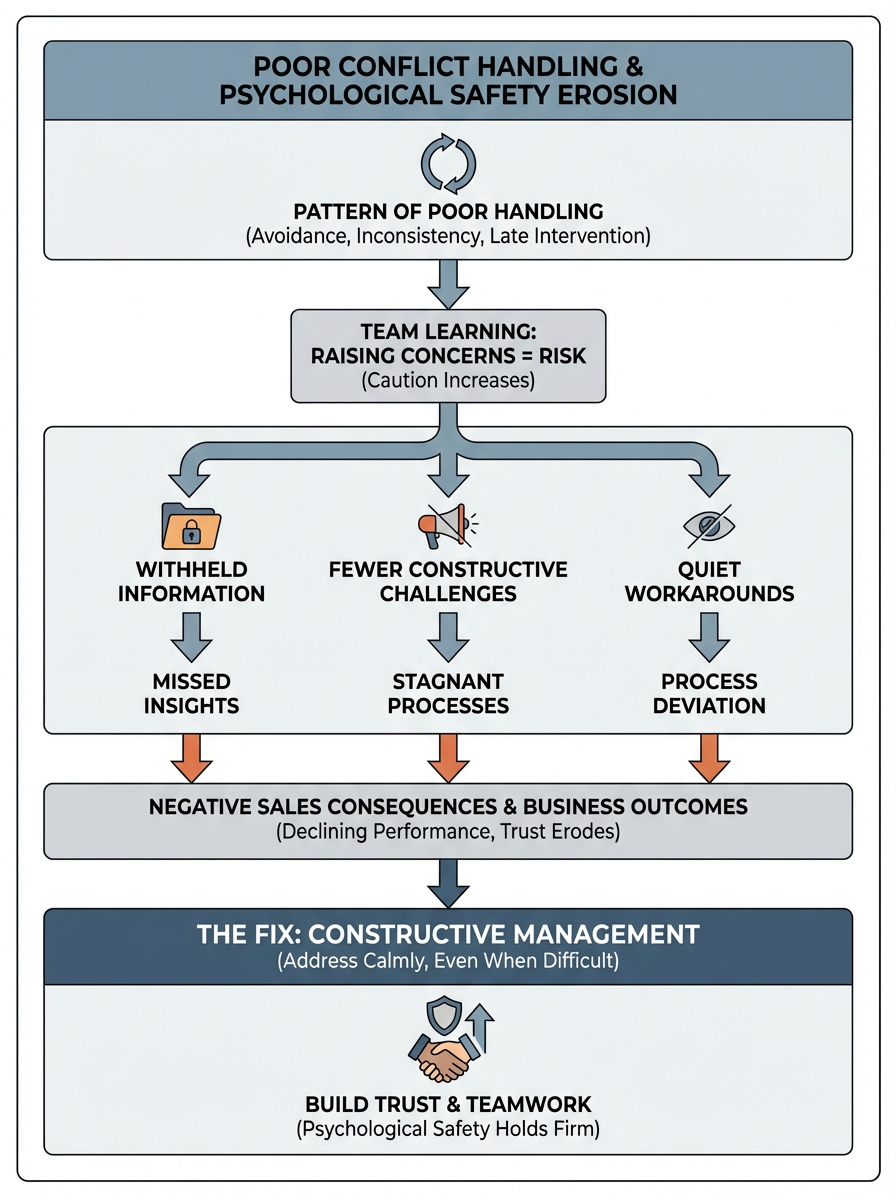
A single incident rarely damages this safety. More often, patterns of avoidance or inconsistency erode it.
If you step in too late, take sides too quickly, or allow issues to drift, your teams learn that raising concerns carries risk.
They become more cautious about what they say, when they say it, and to whom. Over time, that caution shows up as withheld information, fewer challenges that might have been constructive and useful, or quiet workarounds that deviate from your playbook processes.
In sales, where effective teamwork matters, this has real consequences for your business outcomes.
Your managers need to address conflict calmly and constructively, so that trust and teamwork hold firm. Even when decisions are difficult.
We maintain that conflict resolution is not a separate leadership skill. It’s one of the primary ways psychological safety is either reinforced or lost.
Psychological Safety and What Happens After a Deal is Lost
The way conflict is handled sets the tone for everyday interactions. But its impact becomes most visible at moments when performance falls short.
How leaders respond when a deal is lost, a forecast slips, or a strategy doesn’t land tells the team far more about psychological safety than any statement of values ever could.
Sales teams lose deals. Period. It’s inevitable. What happens next is what often varies dramatically.
In the course of our consulting work, we’ve noticed that post-loss conversations can quietly become exercises in justification. Reps explain their decisions defensively, soften uncomfortable truths, or focus on external factors that can’t be challenged.
The intent is self-protection! However, psychological safety changes this dynamic.
If you reframe loss as intelligence gathering, conversations shift from defending decisions to understanding them:
- Assumptions can be questioned.
- Gaps in qualification, pricing strategy, or stakeholder access can be discussed openly.
- The loss becomes usable information rather than something to move past quickly.
For you as a senior leader, this is where psychological safety delivers tangible value.
But for this to happen, you need to ensure consistency across your managers about:
- How they invite challenge
- How they frame disagreement
- How mistakes are discussed
Post-loss discussions then become sharper, forecasting becomes more disciplined, and mistakes are less likely to repeat themselves. Over time, teams learn together and teamwork improves.
Practical Signals That Psychological Safety and Conflict Resolution are Working
You can see psychological safety at work without running surveys or workshops.
One signal is early mention of risks in pipeline and forecast discussions, and whether managers challenge assumptions openly rather than after the meeting.
Another is how quickly you address tensions, instead of leaving them to harden or move into side conversations.
You will also notice fewer recurring issues. The same pricing debates, territory disputes, or deal blockers don’t resurface quarter after quarter.
Teams also share more context, not less, and decisions stick because people understand them, even when they don’t fully agree.
When teams handle conflict well, leadership time shifts from firefighting to forward planning – which is often the clearest indicator of all.
360 Consulting is Happy to Help Establish Psychological Safety and Effective Conflict Resolution
Psychological safety and effective conflict resolution depend on how consistently your managers handle challenge, disagreement, and learning moments across the team.
If you want to strengthen psychological safety in your sales teamwork in a way that supports performance, decision-making, and revenue outcomes, we can help you put the right structures and leadership practices in place.
Arrange a free consultation with 360 Consulting and let’s talk.